

Missing teeth due to aging or an accidental fall? Orthodontic and implant specialists recommend tailored implant solutions that can restore a complete set of teeth in as little as 2 weeks! Before embarking on your dental implant journey, it is essential to understand the basics. A successful implant relies not only on the dentist's expertise but also heavily on the specific implant system you choose. Beame breaks down the key aspects of dental implantation to help you choose the option that best fits your needs.
What Will a Dental Implant Specialist Do for You?
An implant specialist will thoroughly evaluate your oral condition, including the missing tooth site, bone density, and the surrounding gum tissue. They typically utilize X-rays or other imaging techniques to assess feasibility. If there is insufficient bone density, a bone graft (bone powder) will be required. Today, dentists can leverage advanced 3D scanning technology to immediately gain a comprehensive, multi-dimensional overview of the patient's dental structure. This technology not only pinpoints the exact placement angle for the implant but also simplifies the digital design of the final dental crown.
Pro Tip: During your initial consultation, always ask your dentist about the available implant brands and clarify the functional differences between them.
Which Implant Material Is Best?

During implant surgery, the most common materials used are Titanium Alloy, Zirconia (Ceramic), and Hydroxyapatite (HA) Ceramic. Among these, titanium alloy remains the gold standard and is the most widely accepted choice globally due to decades of clinical research and a long-term track record of success. Implant specialists have extensive clinical experience placing titanium implants, making them ideal for patients seeking maximum security.
Titanium Alloy:
One of the most widely used implant materials. It boasts excellent biocompatibility, is highly unlikely to trigger allergic reactions, and integrates powerfully with the jawbone (osseointegration), which drastically boosts implant stability and success rates. It is also exceptionally corrosion-resistant, durable, and relatively lightweight.
Zirconia:
A high-strength ceramic material that has gained substantial traction in cosmetic dentistry. It offers superior biocompatibility and a natural tooth-like aesthetic, promoting excellent gum tissue adaptation. Zirconia implants are typically reserved for specialized cases, such as patients with metal allergies or those with exceptionally high aesthetic demands for their smile line.
Hydroxyapatite (HA) Ceramic:
A biomimetic material with a composition and structure closely resembling natural bone tissue. Its excellent biocompatibility actively stimulates bone growth, providing an enhanced surface area for bone bonding to accelerate implant stability.
Is It Worth Waiting for the Government Dental Implant Queue?
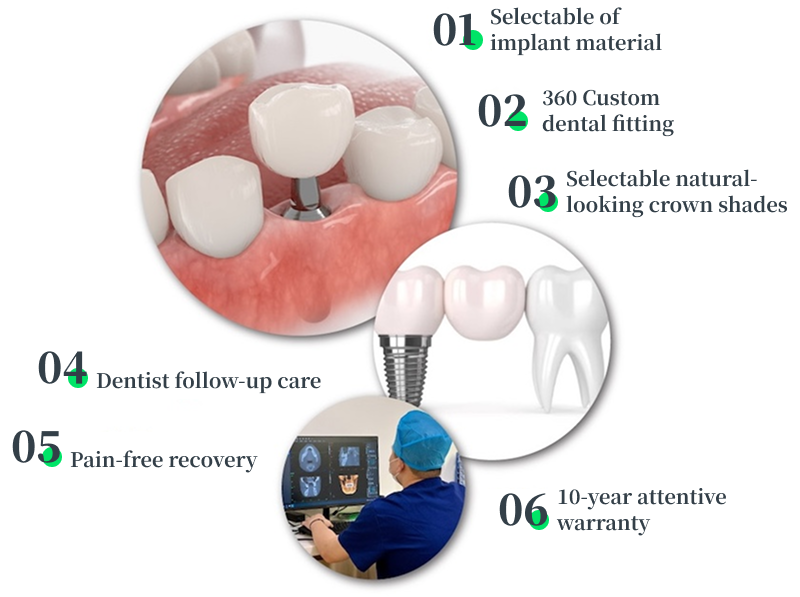
Public dental queues face massive demand coupled with strictly limited resources. This inevitably leads to prolonged waiting times for case reviews. Public systems prioritize cases based on urgency—severe pain or acute traumatic emergencies are bumped to the front, whereas standard missing teeth or aesthetic adjustments face extended delays.
Enduring a lengthy public waitlist means coping with oral discomfort, chewing difficulties, speech articulation issues, or self-consciousness over your appearance. Crucially, leaving a missing gap untreated allows neighboring teeth to shift and drift out of alignment. A problem that originally required only a single implant could escalate into tooth loosening elsewhere, requiring extra orthodontic braces to fix.
How to Avoid Dental Implant Failure?
An implant requires sufficient bone volume and quality to guarantee stability. Prior to surgery, your doctor will perform a thorough bone assessment and implement bone augmentation strategies (such as bone grafts or guided tissue regeneration) if necessary. You must also ensure optimal oral health by brushing regularly, flossing daily, controlling existing conditions like periodontal disease, and completing prerequisite treatments like root canals or necessary extractions.
Post-surgery, success relies on attending regular follow-up checks, avoiding smoking and alcohol, and maintaining rigorous oral hygiene. Most importantly, avoid overloading the implant site. This means refraining from heavy chewing, avoiding biting down on hard objects or large chunks of food, and eliminating behaviors that apply excessive vertical biting pressure.
Beame Implants: Backed by a Professional Medical Team
Beame offers 3 premium implant brands with an expected durability of over 20 years. Our clinics utilize 3D scanning technology for initial assessments to ensure you are a safe candidate for the procedure. Performed by experienced dental surgeons, the implant process can be completed in as little as a single follow-up visit. Before your treatment formally begins, a dedicated coordinator will review every detail one-on-one—including bone grafting needs, the total number of implants, and the final cost—ensuring absolutely zero hidden charges.
Beame 10-Year Dental Implant Warranty
Want to enjoy your favorite foods without restriction after your treatment? Rest easy! Beame provides a comprehensive 10-year post-treatment warranty to ensure your implants function flawlessly in your everyday life.
| Brand | Origin | Special Price (per tooth) | Durability & Warranty |
|---|---|---|---|
| Osstem | South Korea | ¥9,800 | 20+ Years Durability / 10-Year Warranty |
| ITI | Switzerland | ¥15,500 | 20+ Years Durability / 10-Year Warranty |
| Nobel Biocare | Sweden | ¥21,500 | 20+ Years Durability / 10-Year Warranty |
- Transparent Pricing: Absolutely zero hidden fees.
- Material: High-grade pure titanium or titanium alloy systems.
- Flexible Payment: Choose your brand based on your budget, with 12-month credit card installment options available.
Still have questions? Click below to book an exam at our flagship Shenzhen medical center or request a consultation at a Hong Kong store.